By Riverwalk Dental Arts | September 22, 2026
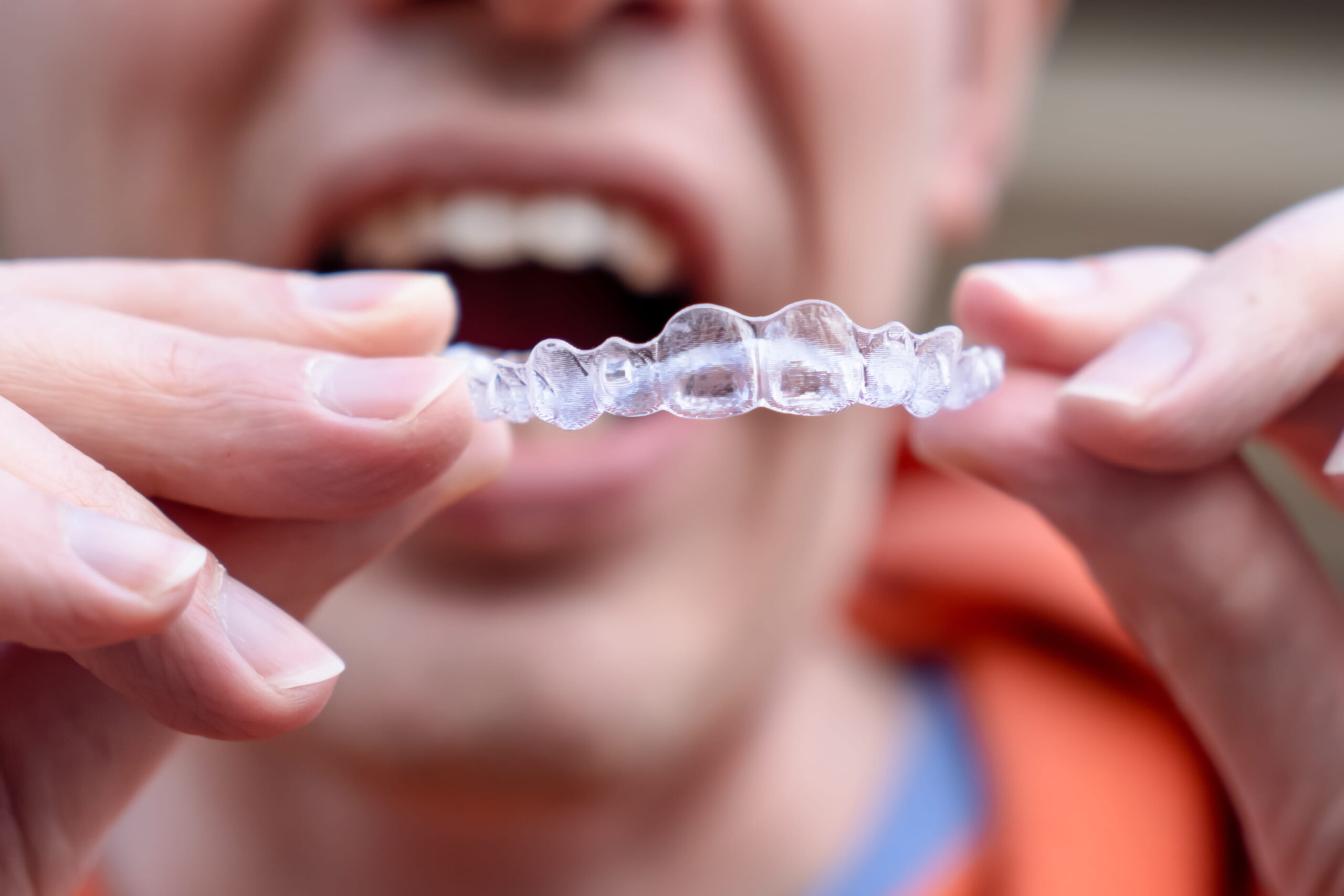
If you are asking, “can Invisalign fix bite problems such as an overbite?” the answer is often yes. Invisalign clear aligners can address certain dental bite problems by moving teeth into planned positions. Riverwalk Dental Arts Rock Hill offers Invisalign in Rock Hill for patients who want an individualized evaluation of their bite and alignment.
What is an overbite, and when does it need treatment?
An overbite is excessive vertical overlap of the upper front teeth over the lower front teeth, and treatment may be considered when the overlap is excessive or affects tooth function or wear.
A normal overbite is not automatically a problem. Invisalign describes an ideal front-tooth overlap as about one-third to one-half of the lower incisors. A deeper overlap can be called a deep bite. Excessive overlap may contribute to tooth wear, biting difficulty, or other functional concerns.
Can Invisalign fix an overbite?
Yes, Invisalign can correct some overbites by controlling tooth movement and, in selected cases, using features designed for bite correction.
Invisalign treatment can move upper and lower teeth according to a digital treatment plan. Attachments, such as SmartForce features, may provide additional control over tooth movement. Some treatment plans also use bite ramps or mandibular-advancement features when appropriate.
Evidence supports clear aligner use for selected deep-bite cases, but the level of correction depends on the diagnosis. A 2025 systematic review found that clear aligners can correct mild to moderate dentoalveolar deep bites, while evidence remains less certain for skeletal cases. The review also found that planned correction can exceed the correction actually achieved, making refinement or additional treatment necessary in some cases.
How does Invisalign correct a bite?
Invisalign corrects a bite by sequencing controlled tooth movements that reduce excessive overlap and improve the relationship between the upper and lower teeth.
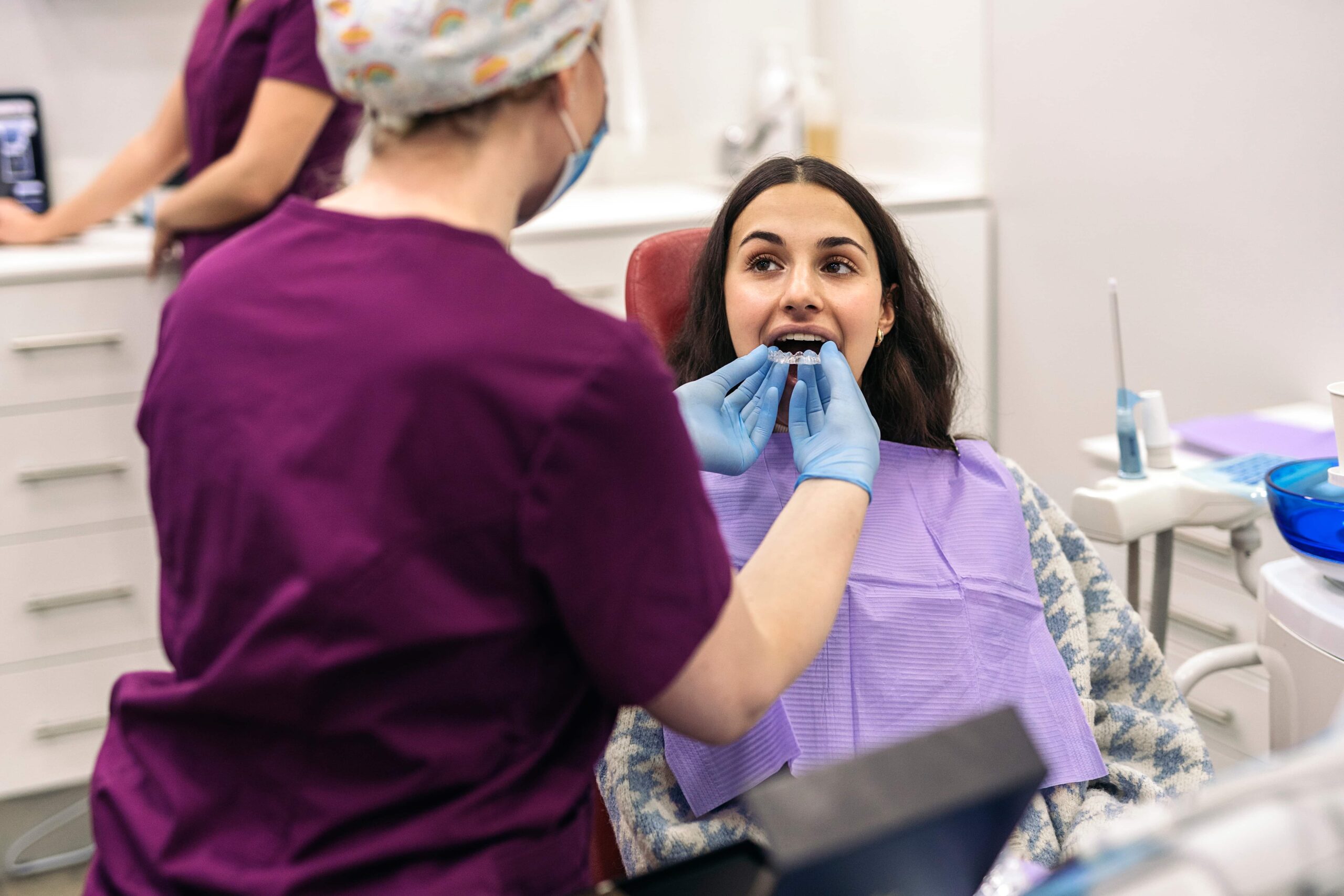
The process begins with a clinical examination and digital scan. The dentist evaluates the bite, tooth position, spacing, and other relevant factors. A customized treatment plan then maps the intended movement of each tooth.
Each aligner is worn for the prescribed period before progressing to the next stage. Riverwalk Dental Arts Rock Hill states that its Invisalign patients typically wear each set for about one to two weeks and attend progress visits about every six to eight weeks. Its Invisalign information page also recommends wearing aligners 20–22 hours per day for best results.
Treatment duration varies by case. Riverwalk Dental Arts Rock Hill states that many patients complete Invisalign in about 12 months or sooner, while its FAQ gives a typical range of 12 to 18 months. The exact timeline should be based on the individual treatment plan rather than a general estimate.
Can Invisalign fix a bad bite in every case?
No, Invisalign is not suitable for every bite problem, particularly when the main problem involves a significant skeletal jaw discrepancy.
A dental overbite caused mainly by tooth position may respond well to clear aligner therapy. A skeletal overbite involves the relationship or size of the jaws and may require a different treatment approach. Severe cases can also require tooth extraction, fixed orthodontic treatment, or corrective jaw surgery, depending on the diagnosis.
This distinction is important when considering Invisalign for malocclusion. The treatment plan must address the functional relationship between the upper and lower teeth.
A 2025 systematic review reported low-quality evidence for deep-bite correction with clear aligners overall. It found that aligners may be effective for mild to moderate dentoalveolar deep bites but that their effectiveness in skeletal cases remains uncertain. This supports an individualized clinical assessment rather than assuming that every severe case can be treated with aligners alone.
What can’t Invisalign fix?
Invisalign cannot reliably correct every skeletal jaw problem because clear aligners primarily control tooth movement and cannot replace surgery when a major jaw-position correction is required.
The limits depend on the cause and severity of the malocclusion. An evaluation may identify a case that needs another orthodontic approach or referral for jaw surgery. Some complex cases can still be managed with Invisalign when the treatment plan includes appropriate attachments, elastics, or other prescribed features.
This is why the phrase “Invisalign severe cases” should not be interpreted as a guarantee that every severe bite is treatable with aligners. Case selection remains essential.
How long does Invisalign take to fix an overbite?
Overbite correction commonly requires months of treatment, with the exact duration determined by the severity, tooth movement required, and patient response.
Invisalign states that overbite treatment may take about 12 to 24 months, depending on the case. Riverwalk Dental Arts Rock Hill reports that many of its patients complete treatment in about 12 months or sooner, while its FAQ lists 12 to 18 months as a typical range.
Consistent wear also matters. If aligners are not worn as prescribed, planned tooth movement may not occur as intended and treatment can require additional time.
Is Invisalign right for my overbite?
An in-person bite evaluation is the most reliable way to determine whether Invisalign can correct your specific overbite.
At Riverwalk Dental Arts Rock Hill, the Invisalign process includes a consultation and digital scanning to evaluate alignment and develop a customized treatment plan. If you are considering Invisalign in Rock Hill, visit our clinic, the practice can assess whether your bite is primarily dental or whether another factor needs to be addressed first.
A consultation can also clarify the expected treatment duration, need for attachments or other features, possible refinements, and estimated cost. Riverwalk Dental Arts Rock Hill currently states that Invisalign treatment in Rock Hill can range from $3,000 to $8,000, depending on case complexity and treatment length.
If your goal is to correct an overbite and improve tooth alignment, schedule a consultation with Riverwalk Dental Arts Rock Hill to review your options and determine whether Invisalign is appropriate for your bite.
FAQs
Can Invisalign fix a bad bite?
Yes, Invisalign can correct some bad bites, but suitability depends on whether the problem is primarily dental or involves a significant skeletal jaw discrepancy.
Can Invisalign fix a severe overbite?
Invisalign may treat selected severe overbite cases, but severe skeletal discrepancies may require another orthodontic approach or jaw surgery.
What can’t Invisalign fix?
Invisalign cannot replace corrective jaw surgery when the primary problem is a major skeletal jaw-position discrepancy.
How long does Invisalign take to fix an overbite?
Overbite treatment can take about 12–24 months, although the actual duration depends on the severity and movement required.
How do I know if Invisalign is right for my bite?
A clinical examination and digital treatment assessment can determine whether Invisalign is appropriate for your specific bite and alignment needs.